
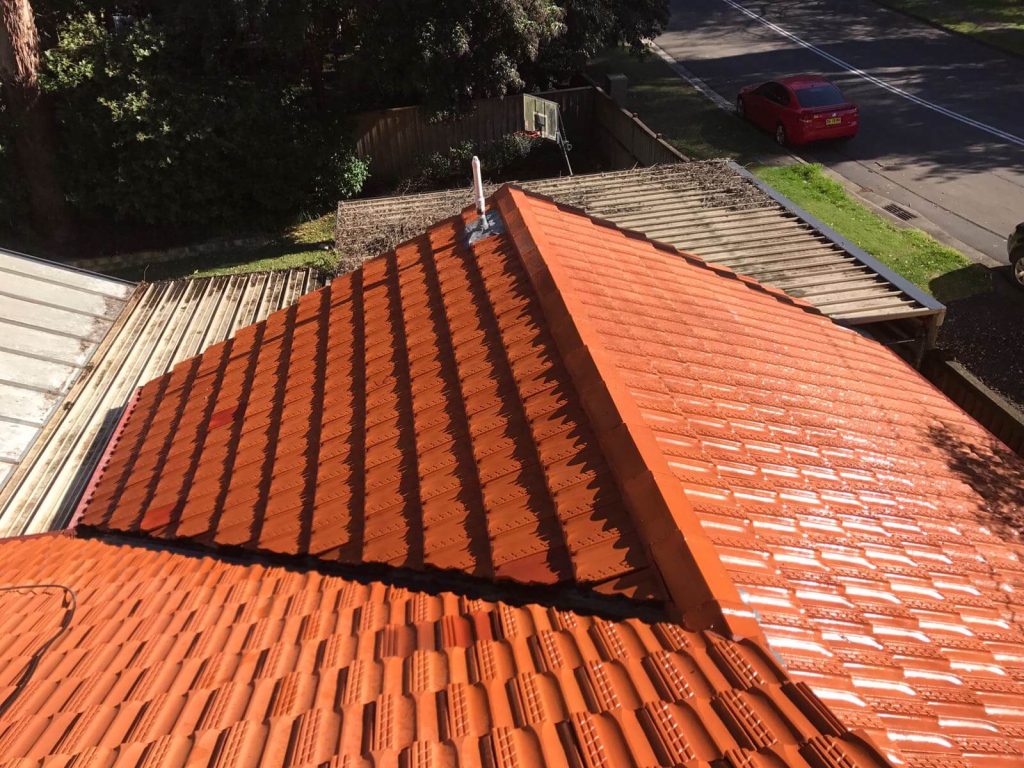
Here’s a question worth sitting with: when was the last time you actually looked at your roof?
Not walked under it, not complained about a drip in the ceiling during the last storm — actually looked at it. Most Sydney homeowners couldn’t tell you what state their roof is in until it starts making its feelings known via water stains on the ceiling, moss colonies you could camp on, or ridge caps that have migrated somewhere they weren’t supposed to.
The roof is the single most important protective layer on your home. It handles Sydney’s punishing summer UV, the coastal salt air in eastern suburbs, everything storm season throws at it, and still somehow doesn’t get a second thought until something goes wrong.
This guide covers everything you need to know about metal roofing, roof restoration, roof cleaning, roof painting, and repair in Sydney — what it costs, how it works, and how to avoid the mistakes that turn a $4,000 restoration into a $25,000 replacement.
Is Your Sydney Roof Trying to Tell You Something?
Roofs are generally terrible communicators — right up until the moment they’re not, and then they’re very loud about it. Here’s what to look for before you’re mopping up the living room.
On the outside:
- Moss, lichen, or algae growth — not just ugly, actively damaging. Organic growth holds moisture against tiles and accelerates deterioration
- Cracked, broken, or slipped tiles — obvious entry points for water
- Ridge caps that look loose, cracked, or misaligned — these are the highest-risk failure points on a tile roof
- Faded, chalky, or peeling roof paint — the protective coating has broken down
- Rust streaks or bubbling on metal roofing — surface corrosion that needs treating before it penetrates
- Sagging sections or visible depressions — potential structural concern requiring urgent assessment
- Gutters full of tile grit — a sign tiles are degrading and shedding granules
On the inside:
- Water stains on ceilings or in the roof space
- Damp or mould smell in the ceiling cavity
- Visible daylight through the roof space
Any of these signs means it’s time to get eyes on the roof — properly, from someone qualified to assess it. The difference between catching something early and letting it escalate is often the difference between a repair bill and a full replacement.
Metal Roofing in Sydney: What You Actually Need to Know
Sydney’s residential roofing landscape has shifted significantly over the past two decades. While concrete and terracotta tiles still dominate older suburbs, metal roofing — particularly Colorbond steel — has become the go-to choice for re-roofing, new builds, and homeowners looking for a low-maintenance, long-life solution.
Why Metal Roofing Works So Well in Sydney
Metal roofing handles Sydney’s climate exceptionally well:
- Heat reflection — Colorbond with Thermatech technology reflects solar heat, keeping surface temperatures 10–15°C cooler than darker alternatives. In western and south-western Sydney where summer roof surface temps regularly hit 65°C+, this translates directly to lower air conditioning costs
- Lightweight — Colorbond steel weighs roughly 4kg per m², versus 40–50kg per m² for concrete tiles. This reduces load on roof framing significantly — critical for older homes where structure may already be working hard
- Longevity — BlueScope’s warranty on Colorbond steel runs up to 36 years. Installed properly, a metal roof performs for 40–50 years with minimal maintenance
- Low maintenance — no rebedding, no repointing, no moss magnets. Metal roofs require periodic inspection and cleaning but nothing close to what tile roofs demand
- Fire resistance — in a city increasingly conscious of bushfire risk, non-combustible roofing matters
Colorbond vs Zincalume: What’s the Difference?
Colorbond is the premium option — baked-on paint finish, wide colour range (Monument, Surfmist, Woodland Grey, Shale Grey, and more), Thermatech solar reflectance, and the longer warranty. It’s what most Sydney residential projects specify.
Zincalume is the unpainted base steel — the same high-quality corrosion-resistant substrate but without the colour coating. Lower upfront cost, but you’ll need to paint it eventually if aesthetics matter. Often used in less visible applications or commercial contexts.
Common Metal Roofing Profiles in Sydney
- Corrugated — classic profile, suits period homes and contemporary designs alike, good for lower pitches
- Trimdek — concealed-fix panel, clean modern look, better at very low pitches
- Klip-Lok — standing seam profile with concealed fasteners, the architectural choice
Professional metal roofing installation in Sydney should always be carried out by a licensed roof plumber — in NSW, metal roofing work is classified as roof plumbing and requires the relevant licence under Fair Trading regulations.
Roof Restoration vs Full Replacement: The Question That Saves You Thousands
This is where most Sydney homeowners get it wrong — and where most of the serious money gets made or saved.
A full roof replacement strips everything back to the battens and starts fresh. It’s necessary when the roof structure is compromised, when tiles are beyond repair, or when a material change is being made (tiles to metal, for example). Cost in Sydney: $15,000–$40,000+ depending on size and material.
A roof restoration extends the life of your existing roof through cleaning, repairs, rebedding and repointing (for tile roofs), and protective coating application. It’s appropriate when the structure is sound but the surface has deteriorated. Cost in Sydney: $3,500–$15,000 — roughly one-third the cost of replacement.
The maths are fairly compelling. A quality restoration extends roof life by 15–20 years. Over 40 years, a well-timed restoration costs significantly less than two replacement cycles. The catch is timing — restoration works on a roof that’s weathered but structurally sound. Once the structure is compromised, you’re in replacement territory.
A professional roof restoration in Sydney from a licensed, experienced operator will always start with an honest assessment of which path makes sense for your roof’s specific condition. If someone skips the inspection and immediately quotes a restoration on a roof that needs replacement — or vice versa — walk away.
The Roof Restoration & Cleaning Process: Step by Step
Here’s exactly what happens during a professional roof restoration in Sydney — no surprises, no hidden steps.
Step 1: Inspection & Assessment
A thorough inspection of the entire roof — not just a glance from the ladder. This covers tile condition, ridge cap integrity, flashing condition, valley irons, sarking, and the gutter system. The assessment determines whether restoration is viable and what repairs are required before coating.
Step 2: High-Pressure Cleaning
Professional roof cleaning using 4,000 PSI pressure washing removes all moss, lichen, algae, dirt, and deteriorated coating from the surface. This is non-negotiable — coating applied over a dirty or moss-covered roof will fail quickly and won’t bond to the surface. Downpipes and gutters are cleared as part of this stage.
For delicate tile roofs where high-pressure water could cause damage, a “soft wash” approach using biodegradable chemical treatment followed by lower-pressure rinsing achieves the same result without the risk.
Step 3: Repairs
This is where the price differentials in quotes often live. Legitimate repairs include:
- Replacing cracked, broken, or slipped tiles with matching replacements
- Re-bedding ridge caps (removing old mortar, applying new flexible bedding compound)
- Repointing ridge caps with flexible colour-matched pointing compound
- Replacing deteriorated valley irons
- Resealing flashings around penetrations (chimneys, skylights, vents)
- Treating rust on metal components
Quotes that omit these steps or bundle them vaguely are hiding costs — or planning to skip them.
Step 4: Primer & Sealer Application
Before coating, a primer or sealer is applied to seal the cleaned surface and improve adhesion for the final coating. For tile roofs with significant porosity, a filler coat may also be applied. For metal roofs, a rust-inhibiting primer is essential on any treated areas.
Step 5: Roof Painting / Protective Coating
Sydney roof painting involves applying two coats of quality roof membrane or paint using an airless sprayer to ensure even coverage at the correct dry film thickness. Premium systems like Dulux Acratex provide warranties up to 12 years. Heat-reflective coating options are particularly valuable for Sydney homes — they can meaningfully reduce internal temperatures and cut cooling costs.
Step 6: Final Inspection & Sign-Off
A completed inspection confirms coating coverage, ridge cap work, and overall finish quality. A written warranty should be provided covering both workmanship and the coating product.
Roof Repair in Sydney: When It’s Not a Full Job
Sometimes a roof doesn’t need restoration — it needs a targeted fix. A professional roof repair might be as focused as:
- Fixing a single persistent leak point around a flashing or skylight
- Replacing a run of cracked tiles after storm damage
- Re-bedding a section of ridge caps that have shifted
- Sealing a valley that’s collecting debris and backing up
The key is accurate diagnosis. A leak in the ceiling is rarely where the water entered — water travels along battens, sarking, and timber before finding somewhere to drip. A good roofer traces the source, not just the symptom.
Guttering in Sydney: The Overlooked Half of the Equation
Gutters are the drainage infrastructure of your roof, and they get almost no attention until they’re overflowing, rusting through, or pulling away from the fascia. Blocked or failing gutters cause:
- Water backing up under roof sheeting or tiles, causing leaks
- Overflow saturating foundations and causing subsidence
- Rust staining on rendered walls and fascia timber
- Mosquito breeding grounds (thanks, standing water)
- Fascia board rot requiring costly timber replacement
Guttering services in Sydney — whether replacement, re-pitching, or gutter guard installation — are best handled alongside any roofing work rather than as a separate visit. The crew is already on the roof, the scaffolding (if needed) is already up, and the job is more efficient combined.
Sydney Roofing Costs: Current 2025–2026 Price Guide
Here’s what Sydney homeowners are actually paying right now.
Roof Restoration (Full Service)
| Roof Size | Typical Cost Range |
| Small (under 100m²) | $3,500–$6,000 |
| Medium (100–150m²) | $6,000–$10,000 |
| Large (150–200m²) | $9,000–$15,000 |
| Very large (200m²+) | $12,000–$20,000+ |
Individual Services
| Service | Typical Cost Range |
| Roof cleaning only | $400–$1,200 |
| Roof painting (coating only) | $18–$25 per m² |
| Ridge cap repointing | $1,500–$3,500 |
| Cleaning + painting | $3,000–$8,000 |
| Roof repair (minor) | $300–$1,500 |
| Roof repair (moderate) | $1,500–$4,000 |
| Gutter replacement | $45–$90 per linear metre |
| Downpipes | $150–$350 each |
Metal Roofing (Installed)
| Scope | Typical Cost Range |
| Colorbond re-roof (single storey) | $15,000–$25,000 |
| Colorbond re-roof (double storey) | $22,000–$40,000 |
| Zincalume (materials cheaper, ~15%) | $13,000–$21,000 |
| Old roof removal | $2,000–$5,000 additional |
| Sarking installation | $3,000–$6,000 additional |
Sydney runs approximately 18% above national average on roofing costs, driven by higher labour rates, strong demand for licensed tradespeople, and the cost of operating in a major city. Always budget for this when comparing national price guides.
Getting Affordable Roof Restoration Without Getting Burned
“Affordable” in Sydney roofing has a specific definition: quality work at a fair market rate, with no corners cut where it counts. The $1,500 quote for a full tile restoration on a two-storey home isn’t affordable — it’s an invitation to problems.
Genuine ways to keep costs reasonable:
Act before it deteriorates further. A roof that needs cleaning and two coats of paint costs far less than one that also needs 40 tile replacements, complete ridge cap rebedding, and valley iron work because it was left another three years. Regular maintenance is the most cost-effective roofing strategy available.
Get written, itemised quotes. A proper quote specifies the cleaning method, repair scope, coating system, number of coats, dry film thickness, and warranty period. Vague “full restoration” quotes for suspiciously low numbers routinely exclude the repair work that makes restoration last.
Ask about heat-reflective coatings. The upfront premium on quality heat-reflective roof paint pays back in reduced cooling bills — particularly relevant in Sydney’s increasingly hot summers. Factor in the running cost, not just the installation cost.
Check the contractor’s licensing. In NSW, residential roofing work over $5,000 requires a licensed contractor under NSW Fair Trading. Roof plumbing (metal roofing) requires a separate plumbing licence. Unlicensed operators aren’t just a compliance risk — they’re a quality risk.
You can see the standard of completed work across Sydney residential and commercial properties in Top View Roofing’s project gallery — useful for calibrating expectations before you start getting quotes.
What to Look for in a Sydney Roofing Company
Not all roofing operators are equal. Here’s how to filter properly:
- NSW Fair Trading licence — verified, current, appropriate class
- Public liability insurance — minimum $10 million for residential work
- Written, itemised quotation — not a verbal “around $X”
- Physical inspection before quoting — anyone quoting from photos alone isn’t quoting your actual roof
- Workmanship warranty — typically 5–10 years for quality operators
- Real customer reviews — not just website testimonials; check Google, Product Review
Read what Sydney homeowners have to say about their experience in Top View Roofing’s customer testimonials — the detail in real reviews tells you more about how a company actually operates than any sales page will.
Frequently Asked Questions
How long does a roof restoration last in Sydney? A quality restoration using premium coating systems lasts 15–20 years. Premium membrane systems like Dulux Acratex carry product warranties of up to 12 years when professionally applied.
Can all tile roofs be restored? Tile roofs that are structurally sound and have intact battens are good candidates for restoration. Roofs with widespread cracking, significant structural movement, or badly deteriorated timber work may be better candidates for replacement. An honest assessment tells you which applies.
How long does a roof restoration take? Most residential restorations take 2–5 days, depending on roof size, condition, required repairs, and Sydney’s unpredictable weather. High-pressure cleaning and restoration coats need appropriate dry time between stages.
Is roof painting worth it? Yes — if the tiles or metal are structurally sound, painting is one of the best value-for-money maintenance investments available. A fresh coat with the right primer and two coats of quality roof paint extends roof life, improves appearance, and can reduce heat absorption.
Do I need council approval for a roof restoration? Standard restoration on an existing roof in the same material and colour typically doesn’t require council approval. Changing roofing material, colour, or configuration — particularly in heritage conservation areas — may require a CDC or DA. Your roofer should advise on this.
Time to Get Your Roof Properly Sorted?
Whether you’re looking at a full Colorbond metal reroofing, a professional restoration to buy another 20 years, a targeted leak repair, a fresh colour coat, or just a long-overdue clean — Top View Roofing covers the full scope of roofing services across Sydney, with over 30 years in the trade, certified technicians, and honest advice on what your roof actually needs.
Free inspection. Written quote. No pressure. Get in touch today and find out exactly where your roof stands.
Top View Roofing provides metal roofing, roof restoration, roof repair, roof cleaning, roof painting, and guttering services across greater Sydney — including the Eastern Suburbs, North Shore, Inner West, Western Sydney, Hills District, South Sydney, Sutherland Shire, St George, Parramatta, Ryde, and surrounding suburbs. Contact: 0425 363 840.